


Why does it make sense to use singing bowls during pregnancy?
Singing bowls during pregnancy can support expectant mothers and their unborn babies in many different ways. They can help reduce stress, find your way back to your center and build a deeper bond between mother and child. During pregnancy in particular, many women describe the gentle vibrations and overtone-rich sounds of a singing bowl as very calming. In a very gentle way, they help create an atmosphere of security and deep calm.
In this article, we tell you more about the effect of singing bowls during pregnancy, which methods there are and what you should keep in mind when using them.
How do singing bowls work during pregnancy?
A stronger bond between mother and child
From the 8th week of pregnancy, fetuses react to touch, and from the 18th week, the baby in the womb can already perceive sounds. During a sound massage in pregnancy, both senses are gently stimulated: hearing and feeling. Feelings of security, protection and safety can arise for both mother and child, so the mother-child relationship during pregnancy can be experienced even more intensely and strengthened.
Strengthening the mother's basic trust
The sounds of a singing bowl can promote self-perception and help you sense your own body better again. They remind us of our deep wisdom and bring us back to our basic trust. A singing bowl massage focuses on what is healthy, on nature and on the naturalness of pregnancy and birth, so expectant mothers increasingly find their way back to their feminine strength and can prepare for the upcoming birth and motherhood with confidence.
Deep relaxation for baby and mother
The vibrations of the singing bowls spread through the mother's body and are also transmitted to the baby through the amniotic fluid. Every cell begins to vibrate and is gently activated. The gentle, noticeable vibration of the singing bowls has a calming effect and helps you settle down. Many pregnant women report that their babies become calm during the sound massage and “vibrate along”.
Methods: how can singing bowls be used during pregnancy?
Singing bowl massage during pregnancy
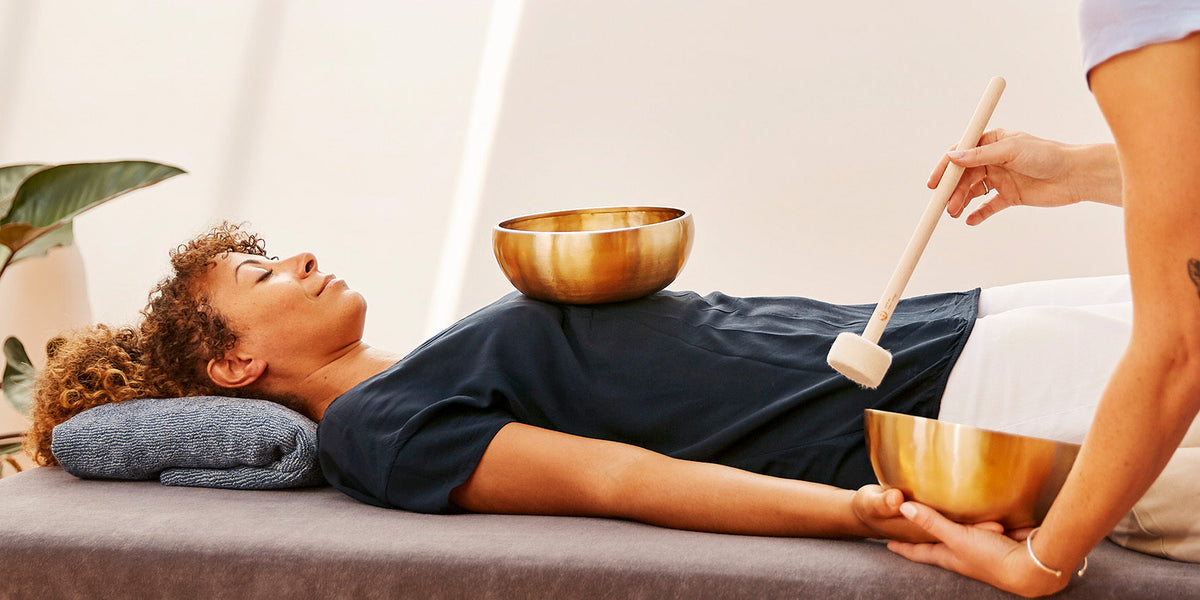
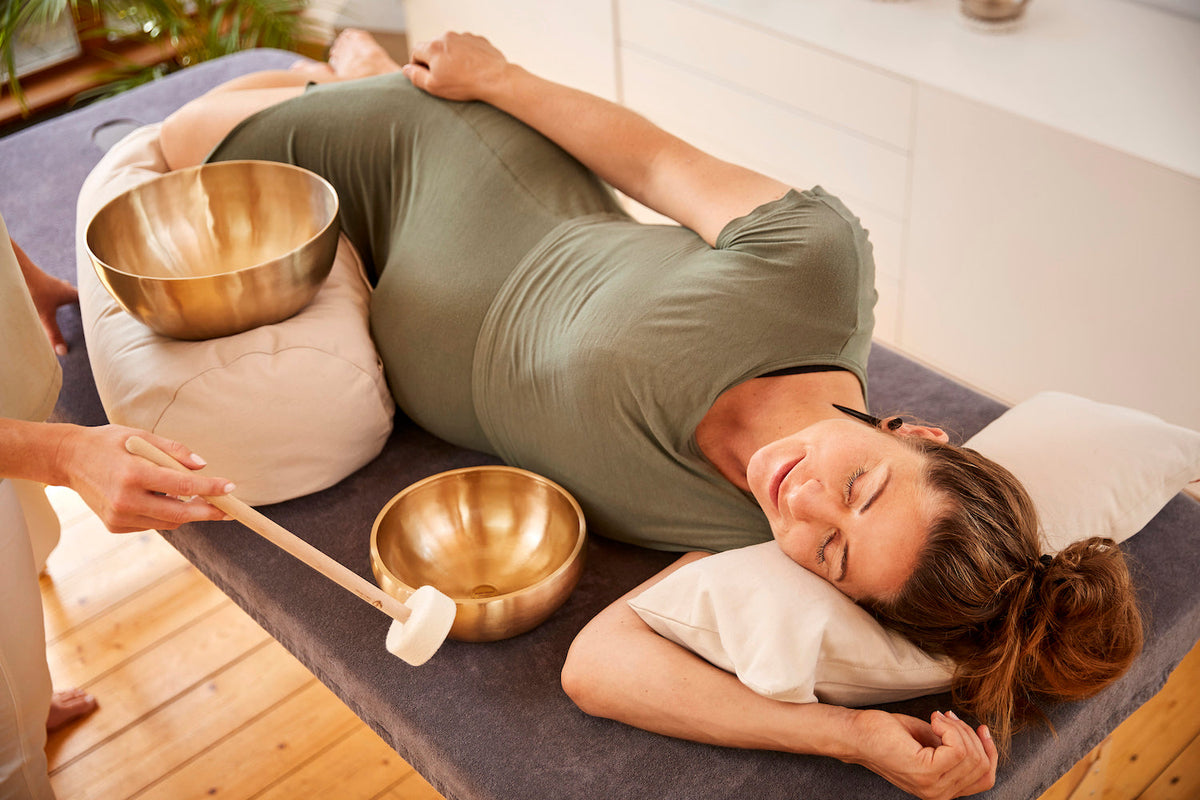
During a singing bowl massage in pregnancy, various high-quality Therapy Singing Bowls are gently placed on or next to the clothed body and carefully struck. Placing singing bowls in the area around the sacrum is avoided until shortly before the due date.
This method is usually offered by experienced and certified sound massage practitioners from the 4th month of pregnancy until about six weeks before the birth.
Sound meditation during pregnancy
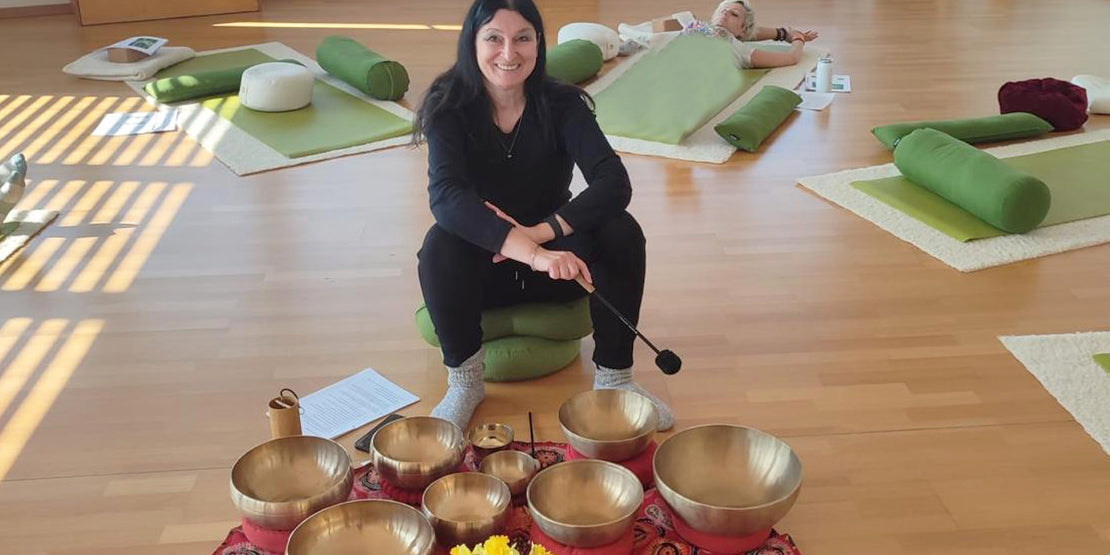
A sound meditation during pregnancy can also be a very soothing experience. Unlike a sound massage, the singing bowls in a sound meditation are not placed on the body but positioned in the room. The sounds of high-quality singing bowls can fill entire rooms and give relaxation to the expectant mother, the baby and the partner.

Which singing bowls are suitable for pregnant women?
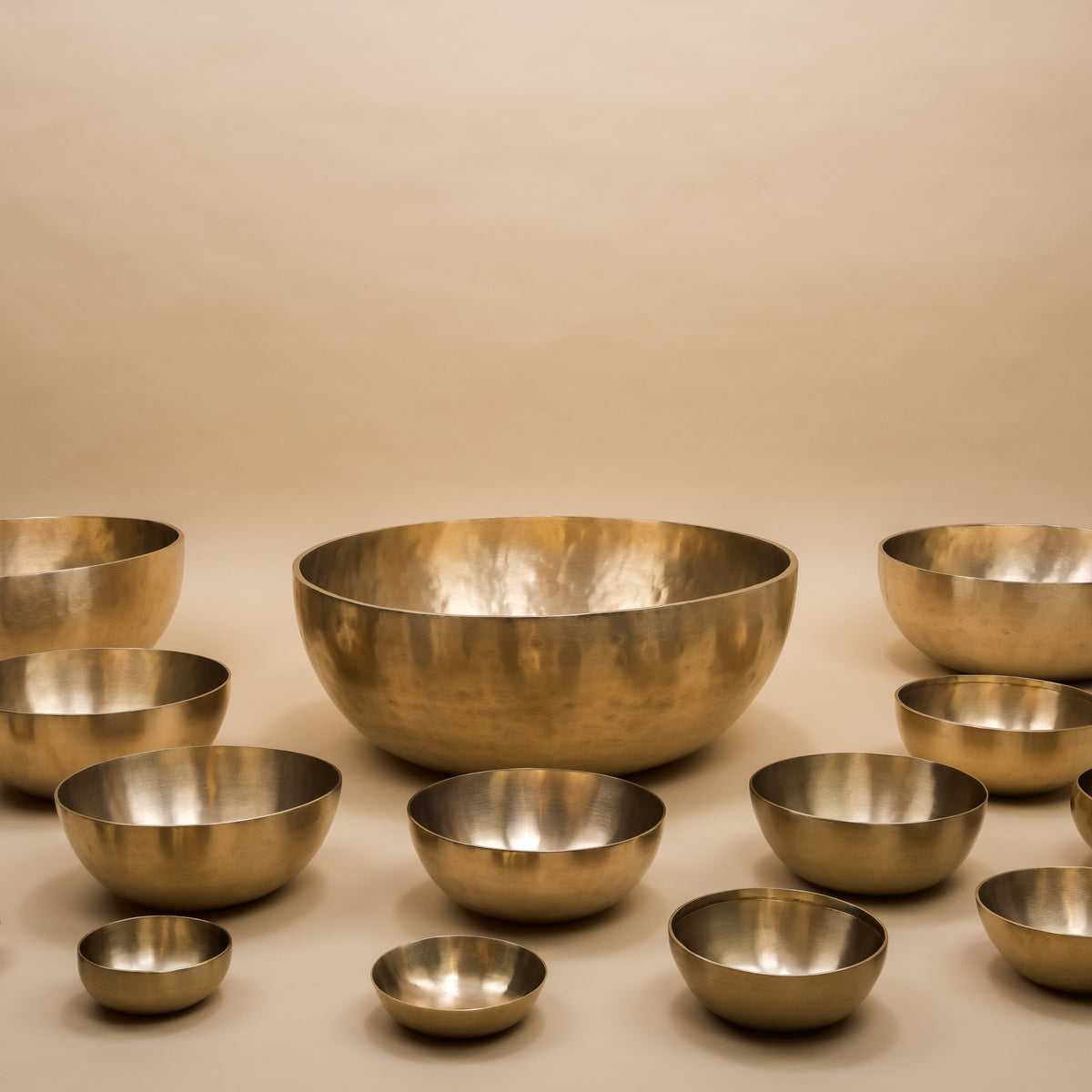
If you decide on a singing bowl massage during pregnancy, we advise you to have it carried out by certified and experienced sound massage practitioners. You should also make sure beforehand that the person giving the sound massage works with high-quality Therapy Singing Bowls. In a professional sound massage, only high-quality singing bowls such as the Peter Hess® Therapy Singing Bowls are used. This ensures safe and effective use.
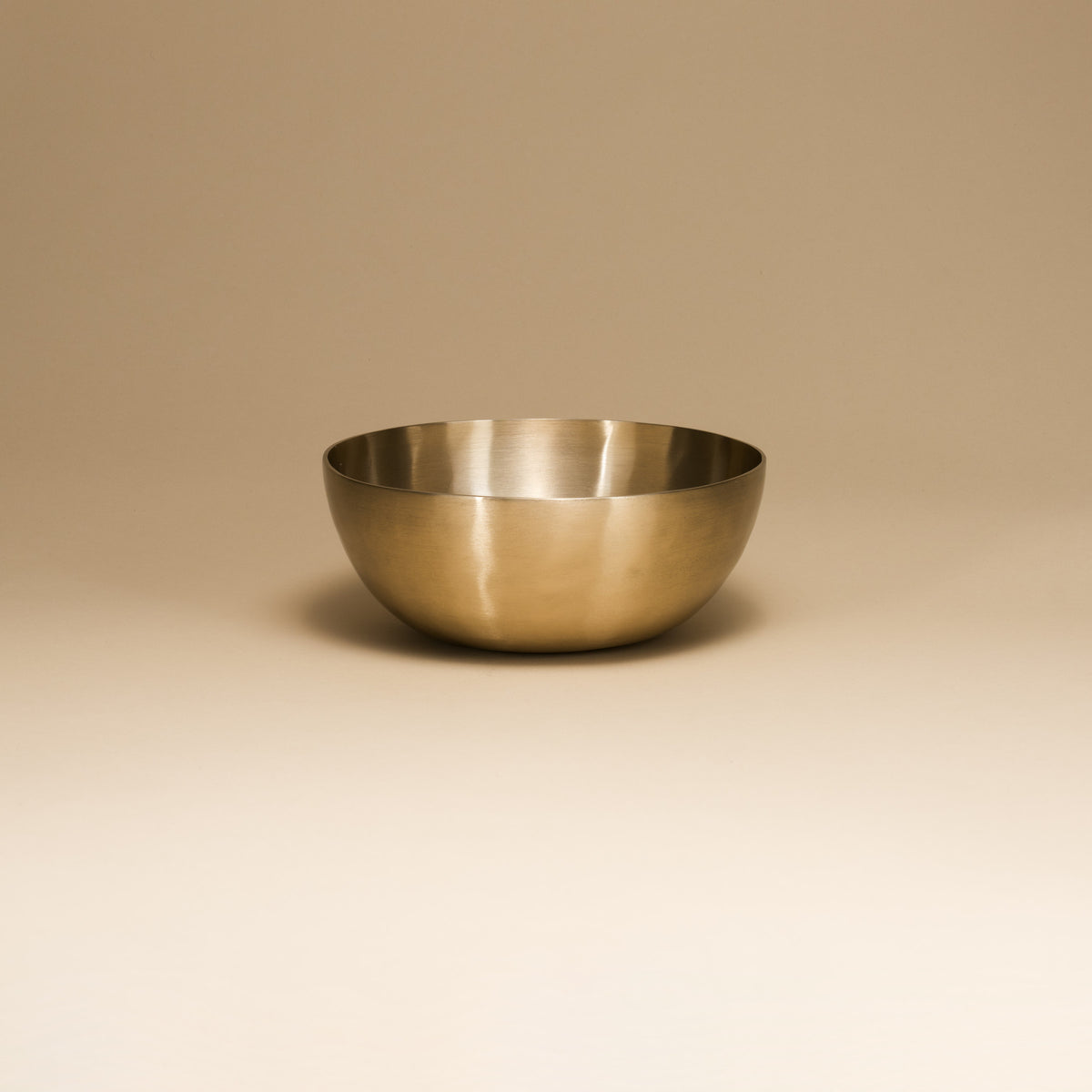
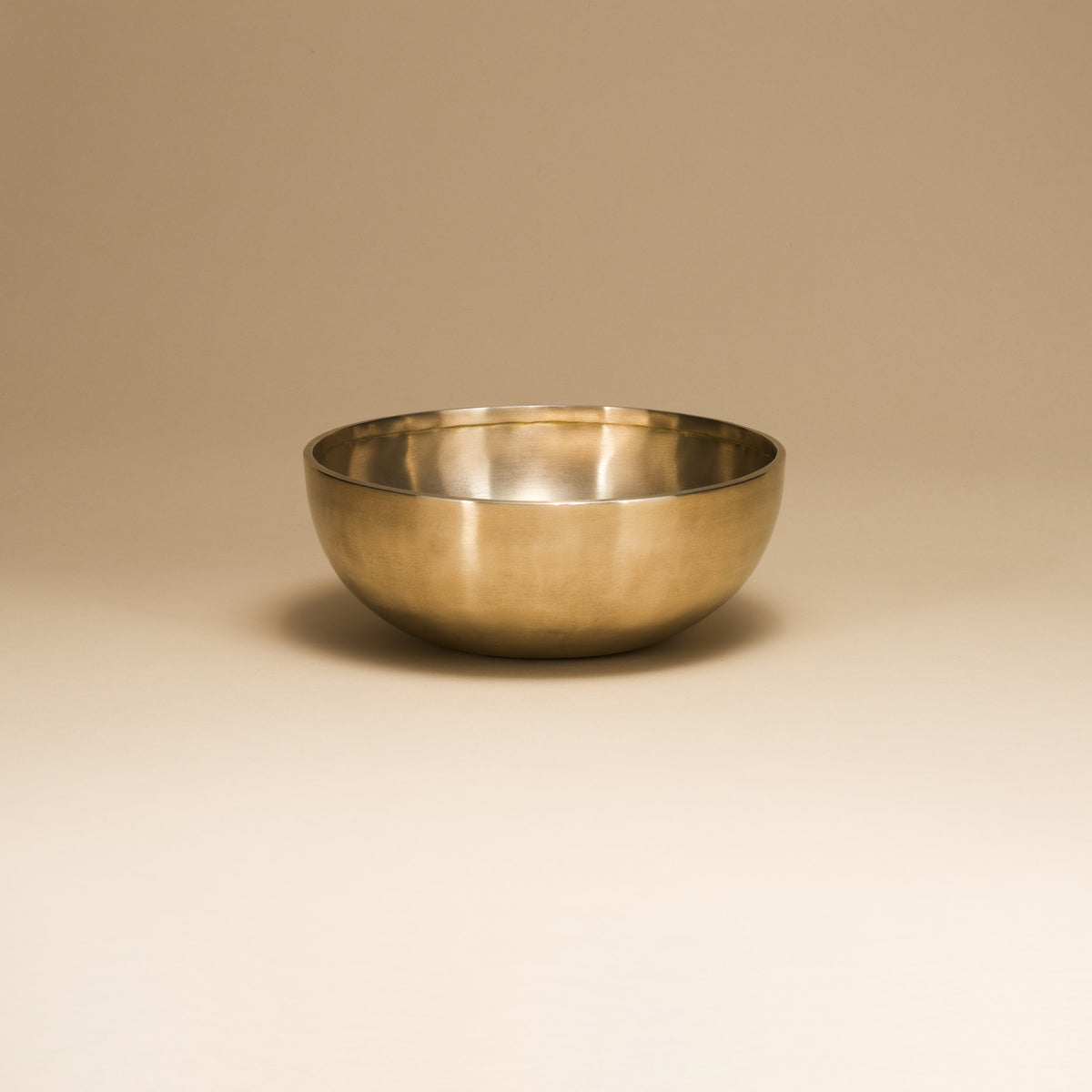
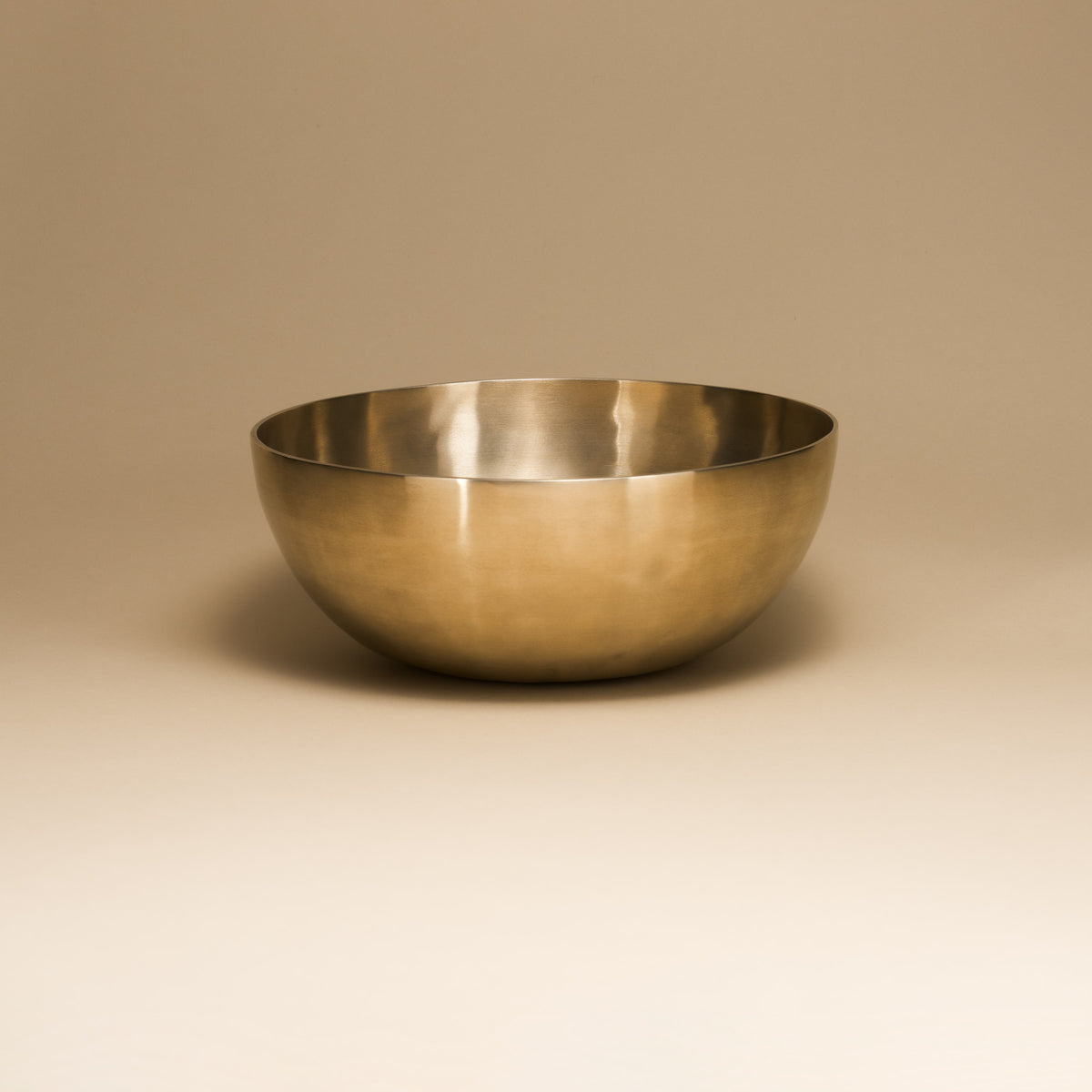
For a singing bowl massage at home, you can use the Peter Hess® Therapy Singing Bowl – Universal Bowl. With its fine and broad vibration behavior, it can be used very flexibly.
Sound meditation and singing bowl massage for pregnant women at home
Even with a single singing bowl, you can strengthen the bond with your baby during pregnancy. Here is a simple sound meditation or mini singing bowl massage for home:
- Lie down comfortably or sit upright.
- Place the Therapy Singing Bowl next to you or on your thighs or chest (lying down).
- Breathe in deeply and feel your abdominal wall.
- Gently strike your singing bowl and listen to the sounds.
- Feel how the vibrations reach your abdominal wall and flow through it.
- Visualize your baby in your belly and feel the connection between the two of you.
- Repeat this for as long as it feels right for you.
You can repeat this exercise every day, and it helps you reduce stress and strengthen trust in your body.
Singing bowl massage during pregnancy: what you should keep in mind
- Make sure you use high-quality Therapy Singing Bowls
- Look for a sound massage practitioner with experience and qualifications
- From the 4th month until 6 weeks before the birth is the best time. Before that, playing the singing bowl next to the body or on the hands is a wonderful way to strengthen well-being and the developing bond.
- No harsh or overly heavy sounds
You can find certified practitioners on the website of the International Professional Association for Sound Massage Therapy (Internationaler Fachverband Klang-Massage-Therapie e. V.)
Frequently asked questions about singing bowl massage during pregnancy
From when can I use singing bowls during pregnancy?
From the 4th month of pregnancy, you can safely use sound massages. Sound meditations are a wonderful way to relax, strengthen the bond and find yourself at any time.
Can I use singing bowls myself?
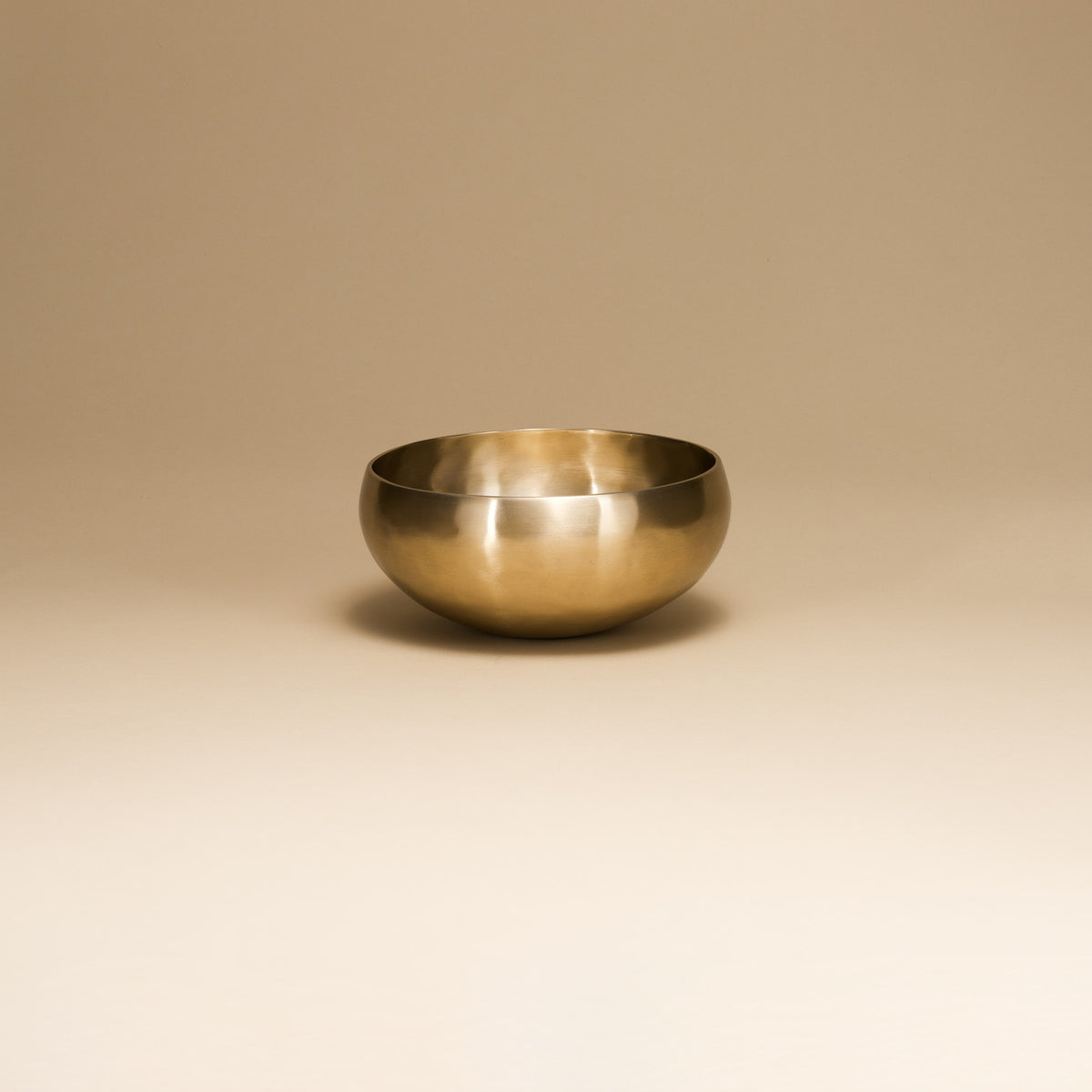
Yes, with a high-quality Therapy Singing Bowl such as the Heart Bowl or Universal Bowl, you can do simple exercises yourself.
Is singing bowl massage safe for the baby?
Yes, the gentle sounds have a calming effect via the amniotic fluid. The prerequisite is the use of high-quality singing bowls.
Which singing bowl is right for me during pregnancy?
The Peter Hess® Universal Bowl or Heart Bowl are particularly well suited for pregnancy. They have a harmonizing effect and promote the bond with the child.
I would like to accompany pregnant women with sound myself. How do I get started?
If you would like to accompany pregnant women with sound yourself, we recommend thorough training in the Peter Hess® Sound Massage, complemented by further training on “Accompanying pregnancy with sound”. This gives you the necessary expertise and allows you to work responsibly and empathetically with expectant mothers.