

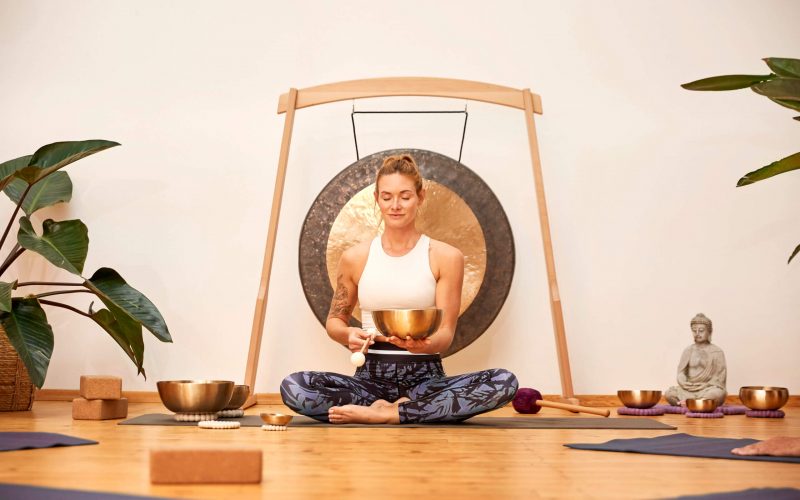
What is a singing bowl meditation?
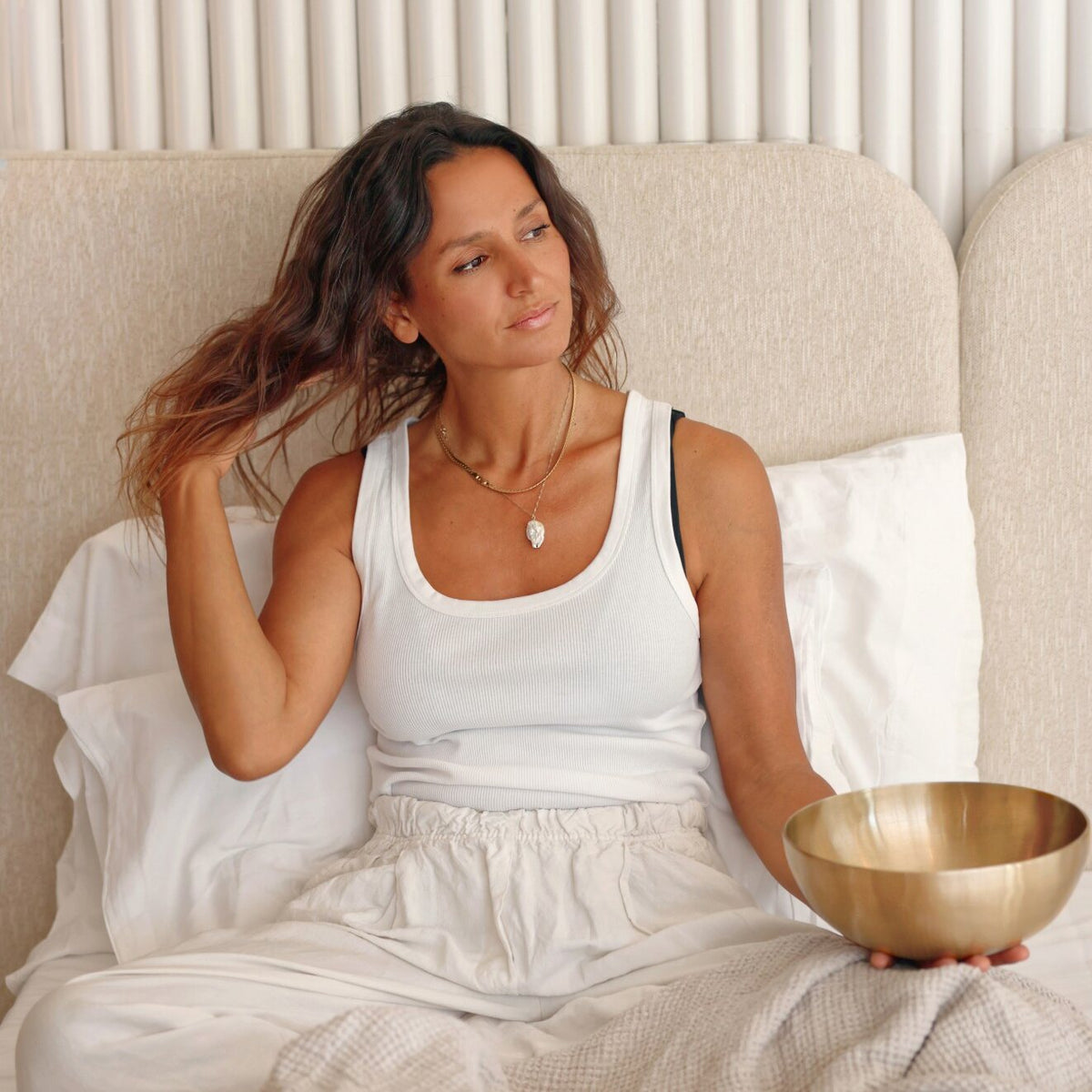
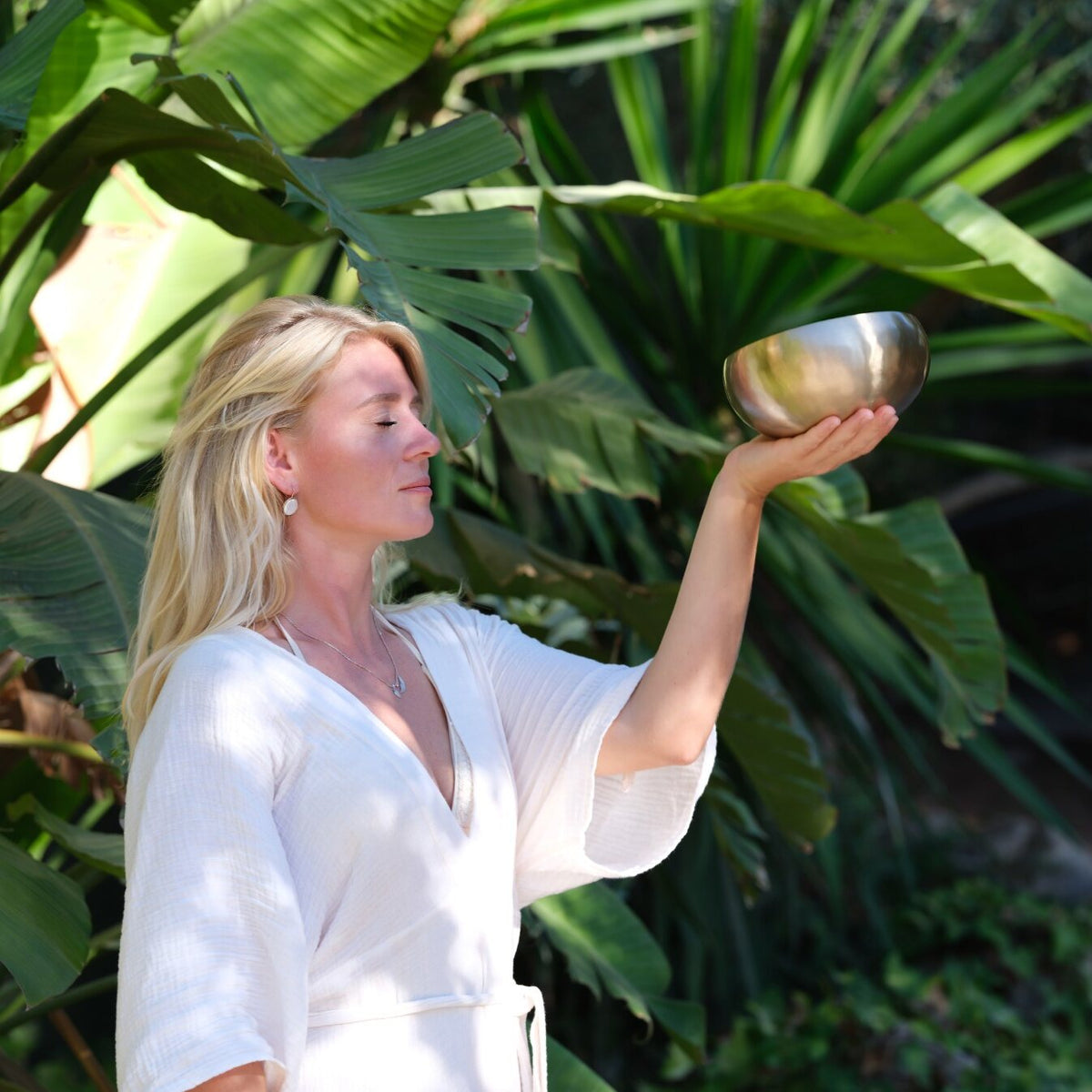
In a meditation with singing bowls, you meditate, usually sitting down, and use the singing bowl as support to reach a state of inner silence. Singing bowl meditation can therefore help you find easier access to meditation, as the sounds already put us into a released and relaxed state of consciousness.
If you already have some practice in meditating with singing bowls, you perceive the familiar sound like a trigger that automatically turns your attention inward. Through a regular meditation practice, you find new clarity and break free from ingrained patterns of thought and behavior.
Is singing bowl meditation for me?
Meditation with singing bowls is easy to learn, so you can practice it even if you do not yet have much experience with singing bowls or meditation. If you want to practice singing bowl meditation alone at home, it just takes a little practice, as the aim is to strike the singing bowl yourself during the meditation without pulling yourself out of meditative absorption.
The only requirement you should bring is curiosity and openness to sounds and vibrations. When you do the singing bowl meditation is up to you. Some people like to start their morning with a meditation in order to meet the challenges of the day with inner composure. Others prefer to meditate with singing bowls in the evening to close the day and wind down.
Note
Meditation with singing bowls can also be practiced by people who are ill or physically limited, as it can be done sitting either on the floor or on a chair.

How does singing bowl meditation work?
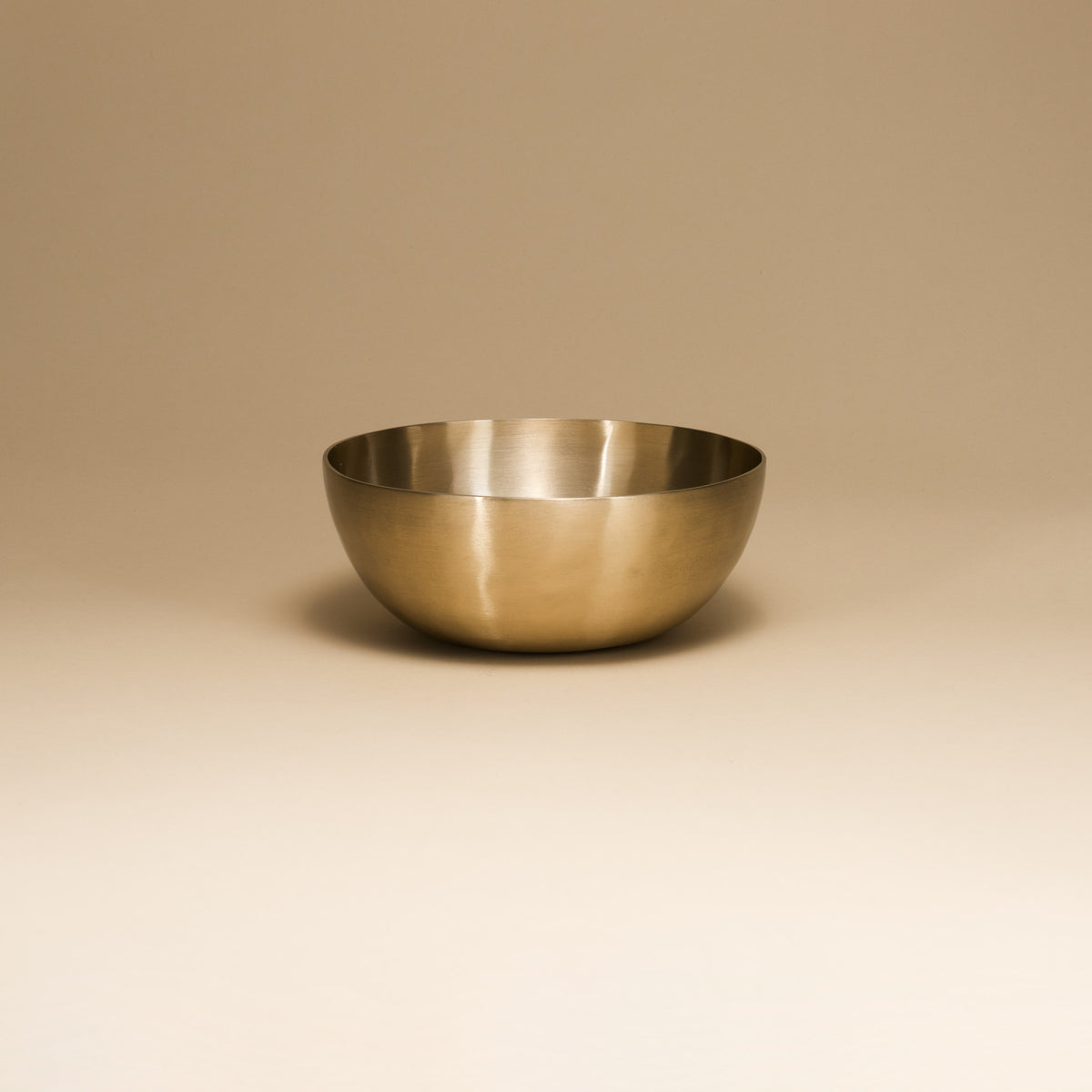
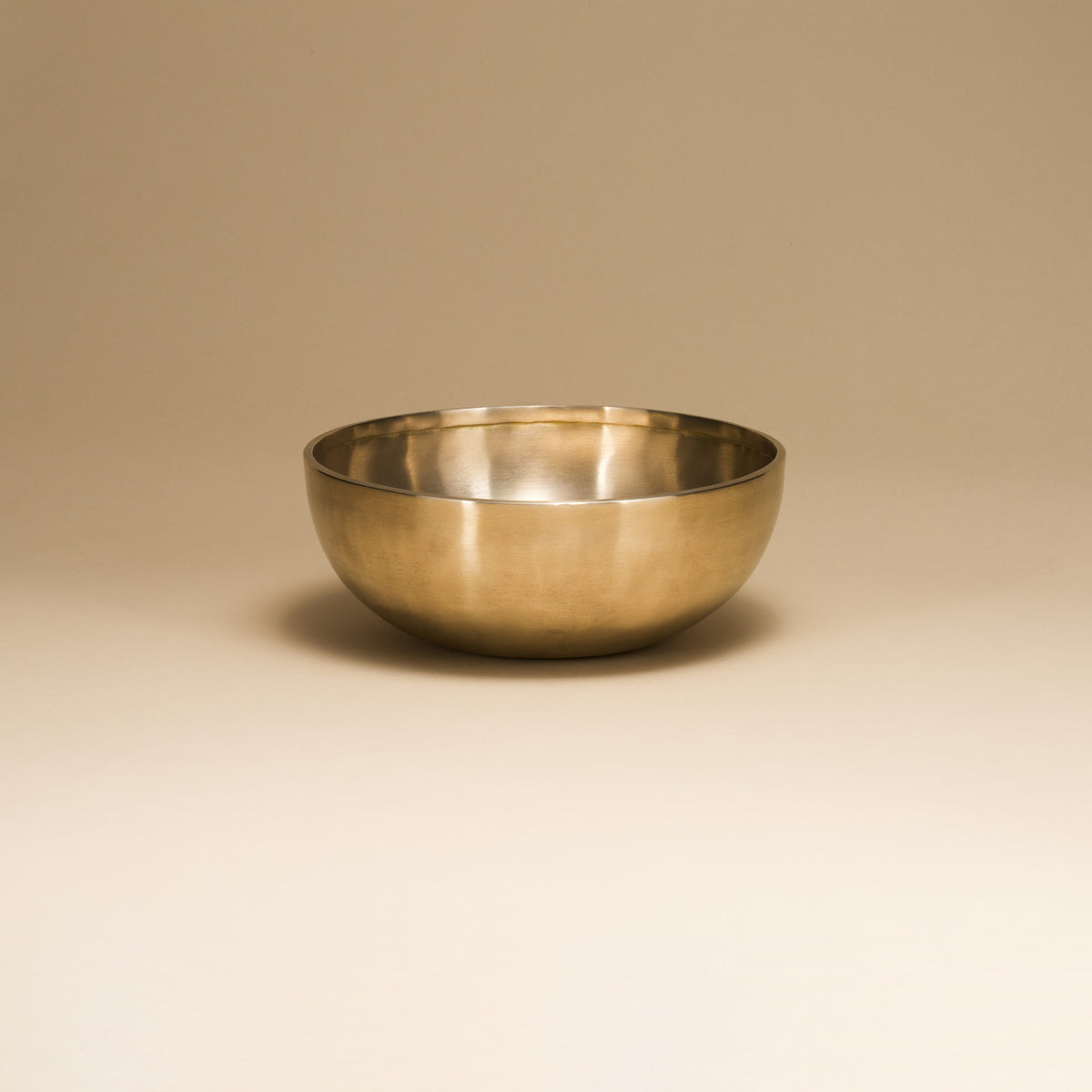
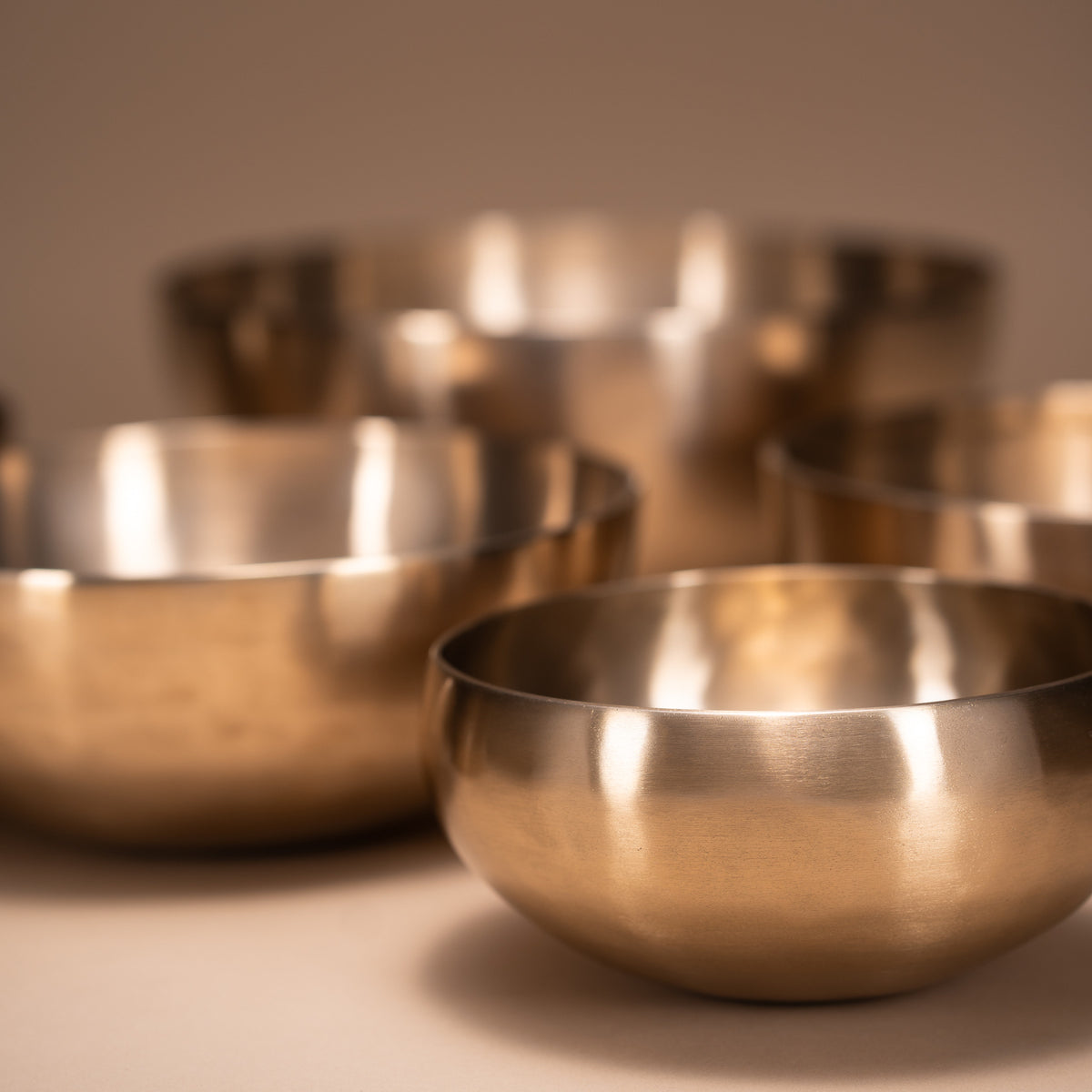
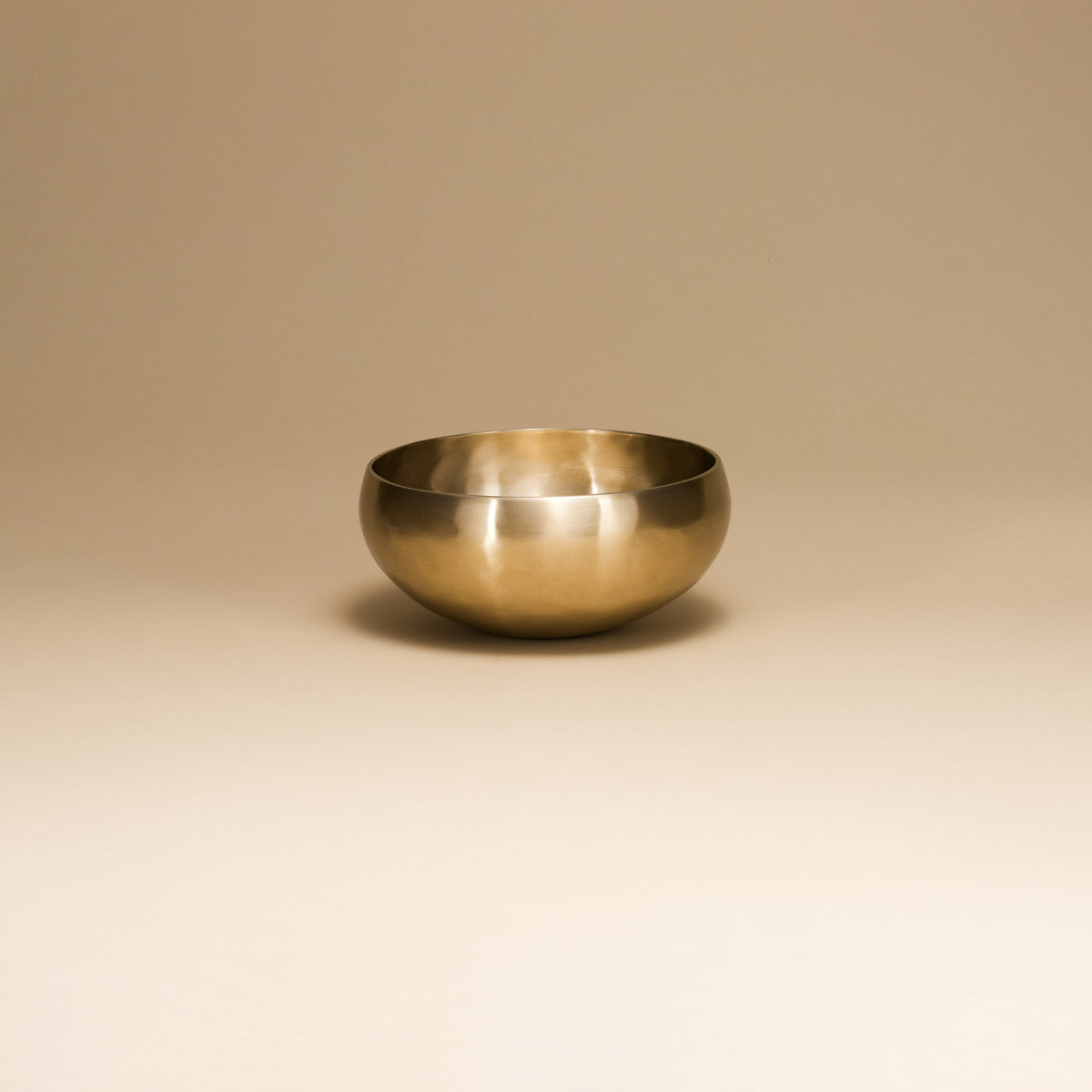
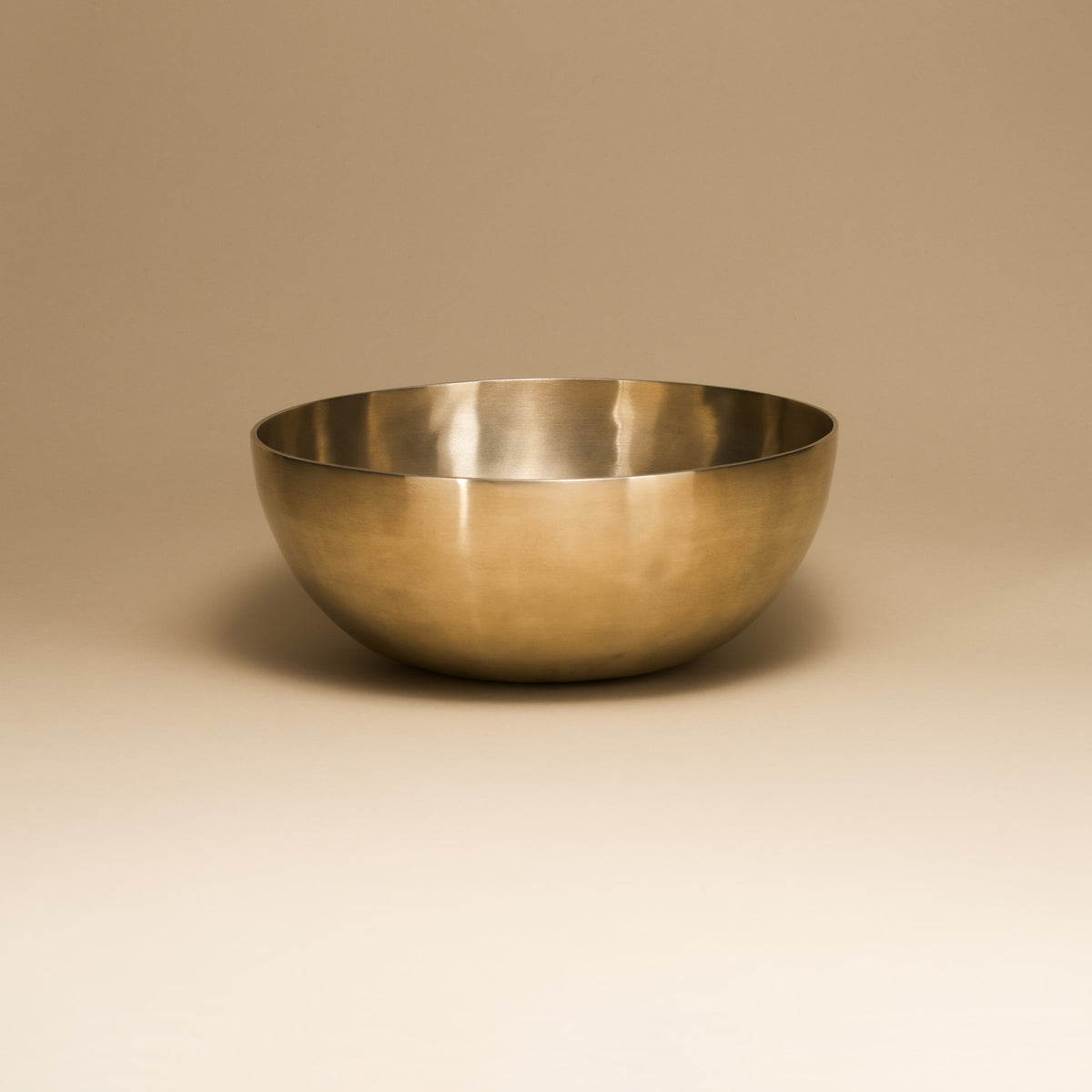
First of all, you need a singing bowl. Once you have found the right model for you, you are ready to begin.
Find a quiet place
Ideally, look for a quiet, undisturbed place and sit on a yoga mat, a meditation cushion or simply a blanket. Switch off your phone and make sure that nobody disturbs you for the next 10 to 15 minutes.
Place your singing bowl
Now place the singing bowl in front of you so that you can strike it comfortably from your sitting position. You can also place the singing bowl on your flat hand or on your fingertips. The only important thing is that the sides of the singing bowl are not dampened by your hand or other materials. The singing bowl should be able to vibrate freely. A singing bowl coaster is also ideal.
Focus on your breath
Close your eyes and at first focus only on your breathing to calm down and relax. Only in this state do you begin to gently strike the singing bowl with a mallet. You can find out exactly how this works in our article on using singing bowls. If you would like to learn more about the different types of mallets, we recommend our mallet guide.
Focus on the vibrations
Listen to the sound, feel the vibrations and direct your full attention to them. Imagine the sound waves flowing through your body. You can also concentrate on one part of your body and notice what effect the sound and vibrations have on that particular spot. Let the singing bowl fade away completely before you strike it again. Focusing on the sound helps you ignore thoughts that come up.
Sense the afterglow and slowly come back
To end the meditation, sense the afterglow for a little while after the last sound, keeping your eyes closed. Finally, breathe in and out deeply a few times, then open your eyes again.
Caution: during pregnancy and in the case of acute physical or mental complaints, please only use after consulting your doctor.
What do I need for a singing bowl meditation?
- Singing bowl
- Mallet
- Singing bowl coaster
- Mat, meditation cushion, blanket or similar
- Comfortable clothing
- Quiet
What effect does a singing bowl meditation have?
With a little practice, meditating with singing bowls leads to deep relaxation for body and mind. This allows you to reduce stress and recharge with new energy and strength. A singing bowl meditation can calm your heartbeat and breathing. Contentment, joy of life and creativity increase. Tension and blockages in the body can be released.
Besides the physical level, on the spiritual level the qi, or life energy, is activated and stimulated. Depending on the pitch of the singing bowl, different chakras or energy centers of the body are addressed. A singing bowl meditation can have a positive influence on the entire nervous system.
In our video, Peter Hess talks about his own first experiences with sound meditations and the impressive effect they had on his body and mind.

The positive effects of meditation include:
- Time for calm, conscious perception and relaxation
- Greater physical and mental resilience
- More balance and inner calm
- Better concentration and motivation
- More self-confidence, inner strength and self-esteem
- More joy of life

What is a gong meditation?
The gong is an archaic instrument with a long tradition. Its broad sound spectrum fascinates and inspires more and more people. The TamTam Gong impresses with its intense sound volume and the Feng Gong with its “wind-like” movement of sound. Besides concerts, the gong is also used in sound massage, sound therapy and sound education and, not least, in meditation. Gong meditation holds wonderful potential for intense self-discovery.
A gong meditation is often offered in combination with Kundalini yoga. After the yoga, participants lie down on their mats and surrender to the intense gong sounds played by the teacher. Our human body consists largely of water, which the gong sets in vibration. It slows down the frequency in the body and brain, putting participants into a state of trance. Above all, a gong meditation helps us detach from our thoughts.
How is the gong played in a gong meditation?
Traditionally, the gong is played in such a way that the individual strikes cannot be heard; instead, the gong is made to sing. A gong meditation is characterized by this very special kind of sound: the gong strike travels into the room, returns as an echo and merges with the next sound. This creates a unique carpet of sound that gradually puts participants into a trance.
It begins with gentle, quiet vibrations that build into ever greater sound intensity over time. To do this, the teacher not only increases the striking force but also switches from soft to hard gong mallets. Gong meditation can be particularly intense when several gongs are played together. This is often also referred to as a gong bath.

What effect does a gong meditation have?
In a gong meditation, the sound is not only perceived through the ears but can also be felt physically, which helps us relax deeply. In this state, emotions, old wounds but also feelings of happiness can come to the surface and be processed. This is why the gong is considered one of the most powerful instruments with a healing effect in a state of trance.
What is singing bowl yoga?
Yoga and sound have belonged together for thousands of years. The additional sound component gives yoga with singing bowls an even deeper quality and encourages an intense encounter with yourself. Singing bowl yoga speaks to people on a physical, emotional and mental level and inspires them to let go with joy.
In singing bowl yoga, it is much easier to direct your attention to your body. This helps you develop a better feel for your body’s needs and relax deeply into the asanas. The sound lets you engage with your yoga practice in a completely new way and enjoy it with all your senses.
How does singing bowl yoga work?
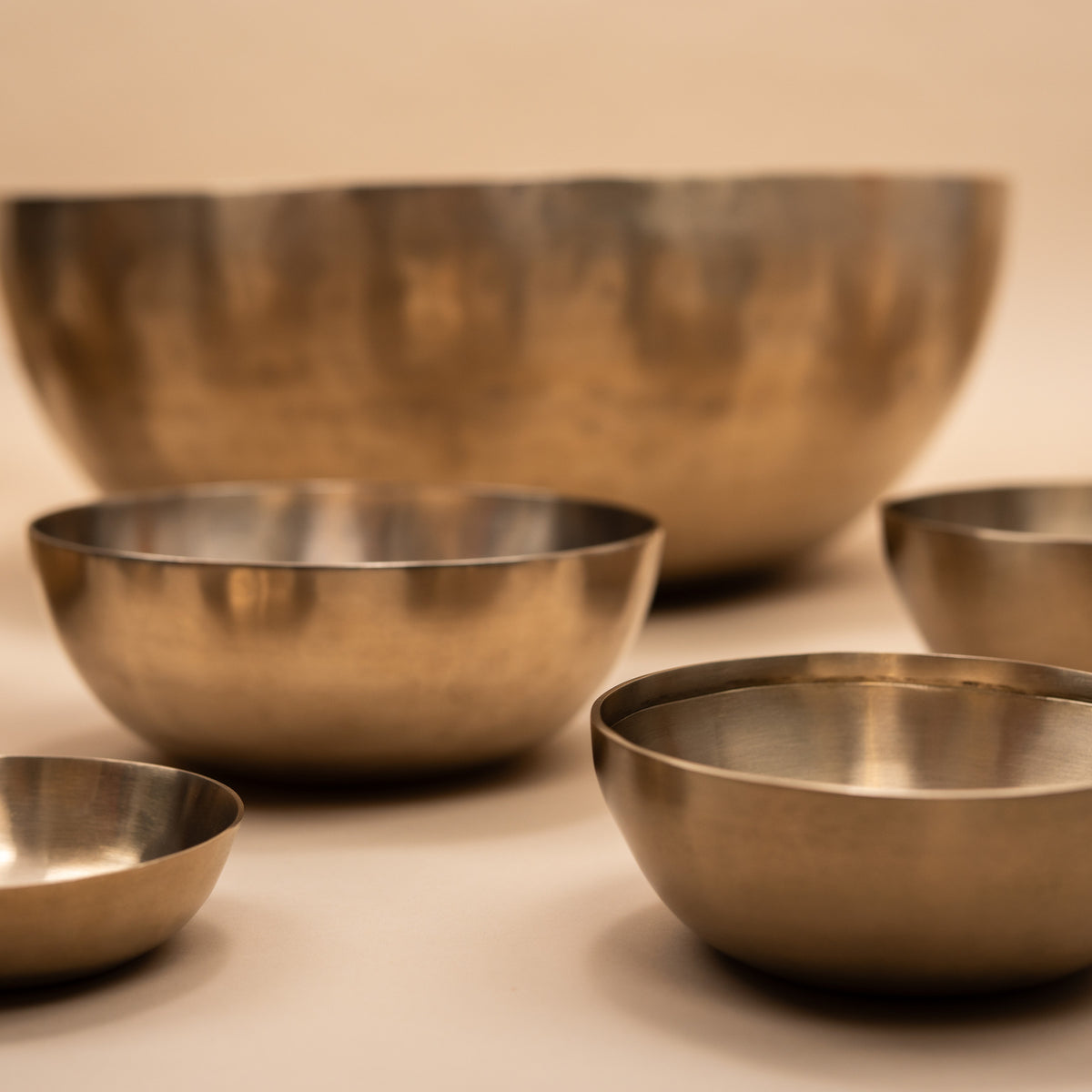
In singing bowl yoga, the singing bowls can be sounded by the teacher or by the yoga practitioners themselves. Mainly the Pelvic Bowls and Heart Bowls of the Peter Hess® Therapy Singing Bowls are used, complemented by Sangha Meditation Singing Bowls. The low sounds support grounding and letting go exercises, while the higher sounds are used mainly for straightening and opening exercises. The singing bowls can stand next to the body or be moved on the body or around it. The singing bowls often sound in alternation.
“In sound yoga, two wonderful forces come together: relaxation and the conscious perception of harmony.”
Remo Rittiner, yoga therapist
Exercise: yin yoga with singing bowls
- After a yin yoga sequence, lie down in shavasana and place a singing bowl, ideally a Pelvic Bowl, on your lower abdomen.
- Now strike it and feel how the gentle vibration of the singing bowl spreads throughout your body.
- Notice whether the sound helps you deepen the relaxation created by the individual yin yoga exercises even further.
- Strike the singing bowl a few more times, chasing the last thoughts from your mind.
- Concentrate fully on the vibration of the singing bowl so that no further thoughts arise. Let yourself sink deeply into the sound.
- Now put the mallet aside and sense the afterglow for a few more minutes.

What is gong yoga?
The gong is considered one of the most powerful instruments. To let it sound both room-filling and gentle during a yoga class, you should know its effects and playing techniques well. Unlike the gong meditation in combination with Kundalini yoga mentioned above, the gong does not always have to be played loudly and powerfully. In Emily Hess’s gong yoga, for example, you learn a rather gentle way of playing the gong.
Emily Hess teaches the special connection between gongs and yoga in a sensitive, playful yet structured way, so that participants learn to use the gong effectively and responsibly. Feel free to be inspired by different teachers and teachings, techniques and playing styles so that you develop your very own way of playing.
How does gong yoga work?
In gong yoga, the sound and vibration of the gong are combined with the methodology of yoga, with the aim of energizing and easing the movement of energy (prana) in the body. In her teaching, Emily Hess does not experiment with the gong strike; instead, she structures the asana sequences along the five rhythms of music therapy according to Gabrielle Roth. This means that even beginners can use the gong safely in yoga.
Different striking rhythms and their vibrations make the various effects of gong yoga on mind and body perceptible. For yoga teachers, the gong is a great enrichment, both for themselves and for their yoga classes.